
IT Services for Associations, Peak Bodies, and NFPs

Your world has nuances most IT providers never encounter. We have spent thirty years learning them.


Most IT providers
see an organisation.
We see an association.

Lean teams. Sensitive member data. Rising compliance obligations. And a mandate to deliver more, with less. Volunteer boards make technology decisions four times a year.

IT sits with whoever is least afraid of it. Systems that were “good enough” five years ago are now creating risk, cost, and frustration. And through all of it, members still expect a seamless digital experience. This is the reality for most associations and peak bodies in Australia today

Over thirty years, Next Step has built deep experience supporting member-based organisations across Australia. We bring the full capability of a specialist managed IT provider – cybersecurity, cloud migrations, system consolidation, business continuity, and strategic planning – combined with a genuine understanding of how associations govern, operate, and serve their members. You will not spend time explaining your world to us. We already know it.

The Challenges We Hear Every Week

If any of this sounds familiar, you are not alone.

Running IT Without a Dedicated Team

Most associations run IT through a generalist, a part-time contractor, or whoever is least afraid of the technology. When that person leaves, the knowledge walks out with them.

Governance Structures That Slow Decisions Down

Technology investments require board approval from volunteers who meet infrequently and are rightly cautious about spending member funds. A straightforward decision can take six months.

Ageing Systems Held Together by Workarounds

Legacy platforms that were never designed to integrate. Manual processes that have become business-as-usual. Hidden costs accumulating quietly in lost staff time and growing risk.

Growing Cyber and Compliance Obligations

Associations hold member data, payment records, and in many cases regulatory information. The Australian Privacy Act is being strengthened and regulators are watching the sector closely.

Vendor Sprawl With no Accountability

Too many disconnected tools that do not talk to each other. Contracts that auto-renew. Staff manually moving data between systems that should be integrated.

Member Expectations Widening the Digital Gap

Members compare their association experience to their best consumer digital interaction. The gap between what most associations deliver and what members now expect keeps growing.

How Next Step Helps

Strategic IT support, built for the way associations actually operate.

Managed IT - Proactive, 
Not Reactive

We monitor, maintain, and manage your technology environment so your team can focus on members, not tech issues. Issues are identified and resolved before they affect your operations.

Cybersecurity and Compliance

From endpoint protection and email security to privacy law obligations and PCI-DSS compliance, we help associations understand their exposure and close the gaps - in plain language your board can act on.

Cloud and System Migrations

Whether you are moving off ageing on-premise servers, consolidating a fragmented tech stack, or navigating an AMS transition, we provide a clear, low-disruption path forward.

Business Continuity and Disaster Recovery

What happens to member services, renewals, and events if systems go down for 24 hours? We make sure you have a tested, practical answer to that question before it becomes urgent.

Board-level Reporting and Strategy

We translate your technology environment into language that boards and committees can engage with. IT investment becomes a governed, strategic conversation - not a reactive one.

Vendor and Contract Management

We help associations understand what their existing contracts actually entitle them to, identify where they are overpaying, and consolidate where it makes sense.

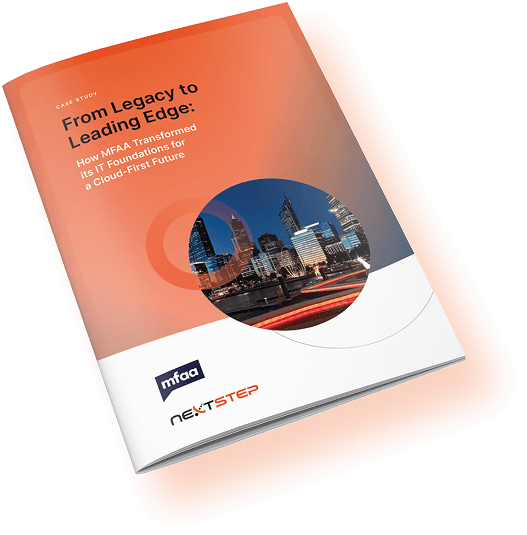
Case Study

From Legacy to Leading Edge: How MFAA Transformed its 
IT Foundations for a Cloud-First Future

The MFAA represents over 16,000 members across Australia’s mortgage and finance broking sector. With a small internal team and a legacy on-premise environment creating friction and security gaps, they partnered with Next Step to move to a modern, cloud-first operating model. The result was stronger security, a simpler environment, and a team that could work from anywhere without the friction of VPNs and mapped drives.
Why Next Steps

What makes Next Step different for this sector.

Sector Focus

We understand the governance pressures, compliance obligations, and operational realities of member-based organisations. These are not challenges most IT providers ever encounter.

Board Fluency

We translate technology risk and investment into plain language that volunteer boards can engage with and approve. Getting IT decisions through governance is part of what we do.

Single Accountability

One team. One relationship. One number to call. We manage your vendors, contracts, and environment so you never have to coordinate across multiple providers when something goes wrong.

Forward Planning

Every client has a technology roadmap. You will always know what is coming, what it will cost, and why it matters - before it becomes urgent, not after it already is.

Thirty Years Deep

Next Step has been doing this since 1994. The sector has changed, the technology has evolved, and the compliance obligations have grown. The commitment to getting it right has not.

Ready to Have a Different Kind of IT Conversation?

Whether you are dealing with an immediate issue or starting to think more strategically about your technology environment, we are worth talking to.

A conversation with our team is practical, plain-language, and carries no obligation. We will listen to where you are, share what we have seen work in similar organisations, and give you an honest view of where to focus first.

Enter your details below:

FAQs

What is managed IT support and how does it work for associations?

Managed IT support means outsourcing the day-to-day management of your technology environment to a specialist provider. Rather than waiting for something to break and calling for help, a managed IT provider monitors your systems proactively, resolves issues before they affect your team, manages your security, and supports your staff on an ongoing basis. For associations, this typically replaces the need for a dedicated internal IT person or reduces reliance on a single generalist.

How much does managed IT support cost for an association or NFP?

Managed IT services are typically priced on a per-user or per-device monthly basis, making costs predictable and easier to budget for than traditional break-fix support. The investment varies depending on the size of your organisation, the complexity of your environment, and the services included. Most associations find that a managed service model costs less over time than reactive IT support, when you factor in the cost of downtime, security incidents, and staff time lost to technology issues.

What should an association look for when choosing an IT partner?

Look for a provider with genuine experience working with member-based organisations not one that has added associations to a generic industry list. Key questions to ask include: How do you communicate with volunteer boards? What does your cybersecurity approach look like? How do you handle IT decisions that require governance approval? Do you have a structured service desk with ticketing and escalation? Can you provide a technology roadmap rather than just reactive support? Ask for references from other associations or peak bodies they have worked with.

How do associations manage cybersecurity without a dedicated security team?

Most associations manage cybersecurity through their IT provider rather than internal staff. A good managed IT partner will implement layered protections including endpoint security, email filtering, multi-factor authentication, patch management, and backup systems. They should also help you understand your obligations under the Australian Privacy Act and work toward alignment with the Essential Eight cybersecurity framework, which provides a practical maturity model for organisations without large internal security teams.

What is the Essential Eight and does my association need to comply with it?

The Essential Eight is a cybersecurity framework developed by the Australian Signals Directorate, outlining eight baseline strategies for protecting organisations against cyber threats. While it is not currently mandatory for most associations, regulators and cyber insurers are increasingly referencing it as a benchmark. Achieving Essential Eight Maturity Level One provides meaningful protection against the most common attack types and demonstrates to your board and members that cybersecurity is being taken seriously.

How does the Australian Privacy Act affect associations and NFPs?

Associations that hold personal information about members, staff, or stakeholders are bound by the Australian Privacy Act. This includes obligations around how you collect, store, use, and destroy personal data. The Act is being strengthened, with expanded requirements around data security, breach notification, and retention. In 2025, the Australian Privacy Commissioner issued an enforceable undertaking against Oxfam Australia following a data breach, putting the NFP sector on notice. Associations should have a clear understanding of what data they hold, where it lives, and how it is protected.

How do we get IT investment approved by a volunteer board with no IT background?

This is one of the most common challenges associations face. The key is translating technology risk into business and governance language rather than technical terms. Rather than presenting a server upgrade, present the risk of not upgrading staff downtime, member data exposure, compliance gaps, and the cost of a reactive fix versus a planned investment. A good IT partner will help you build a business case your board can understand, approve, and feel confident in. Framing IT investment as risk management rather than a technology expense tends to resonate with volunteer boards.

What is vendor sprawl and how does it affect associations?

Vendor sprawl refers to the accumulation of multiple disconnected software tools and technology contracts over time, often without a clear plan for how they work together. Many associations end up with separate platforms for membership management, events, email, finance, and communications none of which integrate cleanly. This creates data duplication, manual workarounds, unnecessary cost, and no single source of truth for member information. Consolidating your technology stack reduces complexity, improves reliability, and makes it easier to manage vendor relationships and contracts.

What is the difference between break-fix IT support and managed IT services?

Break-fix support means you call for help when something goes wrong and pay for the time it takes to fix it. Managed IT services means your provider monitors and maintains your environment continuously, resolves issues proactively, and supports your team on an ongoing basis for a predictable monthly cost. For associations, break-fix support creates unpredictable costs, reactive risk management, and dependency on whoever answers the phone. A managed service model provides structure, accountability, and a provider who is invested in keeping your environment running rather than billing you when it breaks.

How long does a cloud migration take for an association?

The timeline depends on the size and complexity of your current environment, but most association migrations to cloud-based platforms take between two and six months from planning to completion. A well-managed migration follows a structured process assessing the current environment, defining the future state, testing systems before cutover, and migrating in stages to minimise disruption to staff and member services. Associations that have attempted migrations without a clear plan tend to experience longer timelines, data issues, and staff frustration.

Can associations afford managed IT services on a limited budget?

Yes. Managed IT services are designed to be cost-predictable and scalable, meaning you pay for what your organisation actually needs. Many associations find they are already spending money on reactive IT support, duplicate software licences, and staff time managing technology issues costs that are often invisible until they are added up. A managed service model consolidates these costs, eliminates surprises, and gives smaller organisations access to the same level of support and security capability that larger organisations have internally.

What happens to member services if our systems go down?

For most associations, a systems outage during a renewal cycle, CPD deadline, or major event can be deeply disruptive affecting member access, event registrations, payment processing, and staff productivity. A managed IT provider should ensure you have a tested business continuity and disaster recovery plan in place before an outage occurs. This includes regular backups, clear recovery procedures, and defined timeframes for restoring critical systems. The goal is to ensure your organisation can continue to operate and recover quickly regardless of what goes wrong.